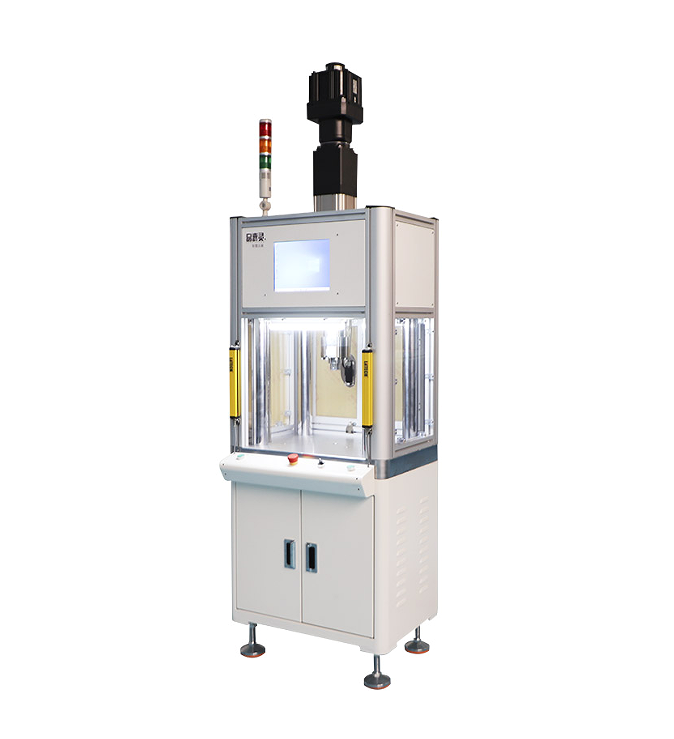
presses servoélectriques fabriquées en Chine


The FAQ is regularly updated to reflect the latest information and to ensure that you have the most accurate details at your fingertips.
Thank you for choosing us, and we hope you find the answers you need!
- What safety precautions should I follow when operating a servo press machine?
When operating a servo press machine, it is important to follow all safety protocols, including wearing appropriate personal protective equipment, using safety guards and devices, and obtaining proper training on the machine’s operation. Additionally, only trained and authorized personnel should operate the machine.
- What is Servo Riveting Machine?
Our servo riveting machine is a kind of automated equipment used for the process of riveting. Riveting is a permanent fastening method that joins two or more materials together using a rivet, which is a metal pin with a head at one end. The rivet is inserted into pre-drilled holes in the materials to be joined, and then the other end is deformed or “headed” to secure the materials in place.
- What is a Desktop Servo Riveting Machine?
Desktop Servo Riveting Machine are high-torque machines. They are able to produce the output pressing force with full energy at any point of an operation.
- Do you have an inspection procedure for the product?
Yes, We have a strict inspection of product quality and packing.
- What is the maintenance required for a servo press machine?
A servo press machine requires regular maintenance, including lubrication, checking for wear of components, and calibration of the servo motor. Regular maintenance ensures optimal performance and longevity of the machine.
- What are the advantages of using a servo press machine?
The advantages of using a servo press machine include reduced production costs, increased productivity, improved product quality, and better energy efficiency.
- What types of materials can be formed using a servo press machine?
A servo press machine can be used to form a variety of materials, including steel, aluminium, copper, and other alloys.
- Which payment terms you can accept?
We can accept flexible payment methods including Bank Transfer, LC, DP, Western Union, Paypal or combined terms as negotiated.
- What is the accuracy of the servo press?
Positioning accuracy: (mm) : ±0.01
Pressure Accuracy (%F.S): 0.5
Displacement resolution (mm) : 0.001
- What is a servo linear actuator mechanism?
The servo motor is directly connected with the transmission screw of the electric cylinder, so that the encoder of the servo motor directly feeds back the displacement of the moving piston of the electric cylinder, which reduces the inertia and clearance of the intermediate link, and improves the control and control accuracy.